Embedded Protections Weave Limit Tools Into Bonus Cycles Across Dealer Tables And Sports Markets
Written by Parker Ludwig · Aug 23, 2026
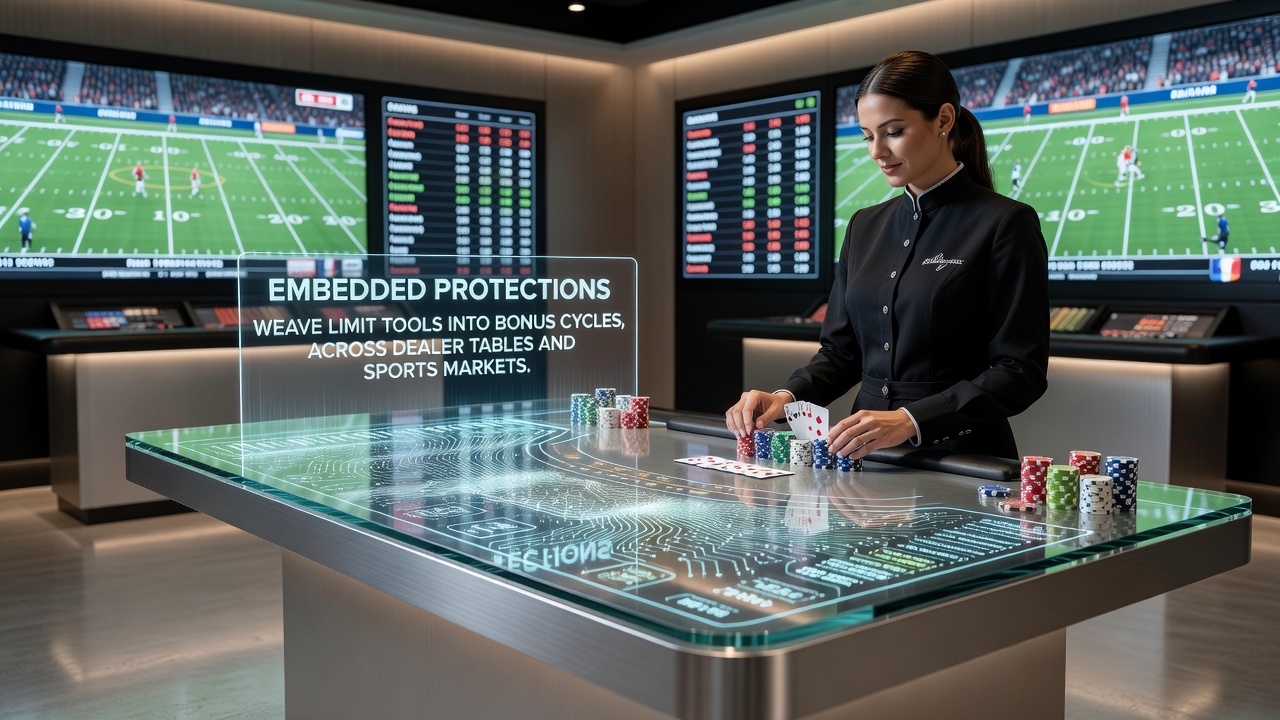
Embedded Protections Weave Limit Tools Into Bonus Cycles Across Dealer Tables And Sports Markets
Operators across live dealer environments and sports markets continue to embed protection mechanisms directly into bonus structures, creating systems where spending caps activate automatically during promotional periods. Data from industry reports shows these integrations adjust wager limits in real time as players move through bonus cycles, preventing escalation beyond predefined thresholds. In August 2026 several platforms updated their protocols to align with emerging compliance standards, resulting in synchronized tools that monitor both table game activity and sports stake patterns within the same account framework.
Mechanics of Limit Integration in Dealer Table Bonuses
Live dealer tables now incorporate limit tools that trigger at specific points in bonus progression, such as when players reach midway through a matched deposit cycle or complete a set number of hands. These tools cap individual bet sizes while still allowing participation in the promotional round, and they draw from account-wide data rather than isolated game sessions. Observers note that this approach maintains game flow because adjustments occur without interrupting the dealer interaction or requiring separate player inputs. Studies conducted by research institutions in Europe indicate that such embedded features reduce instances of rapid spend increases during live sessions by coordinating bonus multipliers with automatic stake reductions.
Application Across Sports Betting Markets
Sports markets apply similar weaving techniques where bonus funds tied to accumulator or single-event wagers activate spending limits based on odds ranges and market volatility. When a player enters a bonus cycle that includes boosted odds on specific fixtures, the system monitors cumulative exposure and enforces per-market caps that scale with the remaining bonus balance. This coordination extends to in-play betting, where limit tools recalibrate after each settlement to reflect updated account positions. Figures from the American Gaming Association reveal consistent patterns in how these systems handle cross-market activity, particularly when users combine sports stakes with table game bonuses under unified loyalty tiers.
Cross-Platform Synchronization and Data Flow
Platforms achieve synchronization by routing all bonus and limit data through central engines that update every few seconds across dealer streams and sports interfaces. A player who shifts from a blackjack table bonus into a football accumulator sees the active cap adjust immediately because the system treats both activities as segments of one cycle. This method avoids the need for manual resets and keeps protection levels consistent regardless of device or session length. In August 2026 operators reported higher adoption rates for these engines after testing showed improved accuracy in tracking multi-product usage.

Regulatory Alignment and Industry Standards
Multiple jurisdictions now require operators to demonstrate that limit tools function inside bonus structures rather than as add-on features. The Malta Gaming Authority has published guidelines that outline testing procedures for verifying automatic cap activation during promotional periods, while the Australian Communications and Media Authority tracks similar implementations in its market reviews. These standards emphasize that protection mechanisms must remain active even when bonus terms change mid-cycle, ensuring continuity for users who move between table games and sports events. Industry associations have documented case examples where synchronized systems helped platforms meet reporting requirements without separate compliance modules for each product type.
Technical Implementation Examples
One documented rollout involved a platform that linked its poker table bonus engine to sports market controls through a shared database layer. When bonus funds reached 60 percent depletion the system applied a progressive stake reduction across both environments, and this change occurred without player notification because the adjustment stayed within pre-agreed parameters. Another implementation used algorithmic triggers that detected simultaneous activity in live dealer roulette and tennis betting, then enforced a unified daily exposure limit drawn from the combined bonus and cash balances. Researchers at academic centers studying digital gaming environments have examined these configurations and noted measurable consistency in how limits scale with bonus size.
Future Developments in Protection Embedding
Developments scheduled beyond August 2026 focus on expanding real-time analytics that predict when a bonus cycle might approach limit thresholds, allowing preemptive adjustments before any breach occurs. These advancements build on existing data flows and aim to integrate additional product categories while preserving the core weaving of limits into promotional mechanics. Trade groups continue to share technical specifications that support cross-operator compatibility, reducing the risk of inconsistent application when players use multiple licensed platforms.
Conclusion
Embedded protections that weave limit tools into bonus cycles represent a structural shift in how dealer tables and sports markets manage promotional activity. The approach relies on centralized data handling, regulatory alignment across regions, and technical configurations that maintain continuity for users. As platforms refine these systems through 2026 and beyond, the focus remains on seamless integration that supports both operational requirements and player account controls.